Project Nº:
2023-1-BE02-KA220-HED-000159585

Project Duration:
36 months | November 2023 – October 2026


Project Nº:
2023-1-BE02-KA220-HED-000159585
Project Duration:
36 months | November 2023 – October 2026
Want to try the game in your browser? Click here to access the web version!
You can also download a version of the game to play later! Click here to start the download!
Please note that this version of the game is only available to users on Windows.
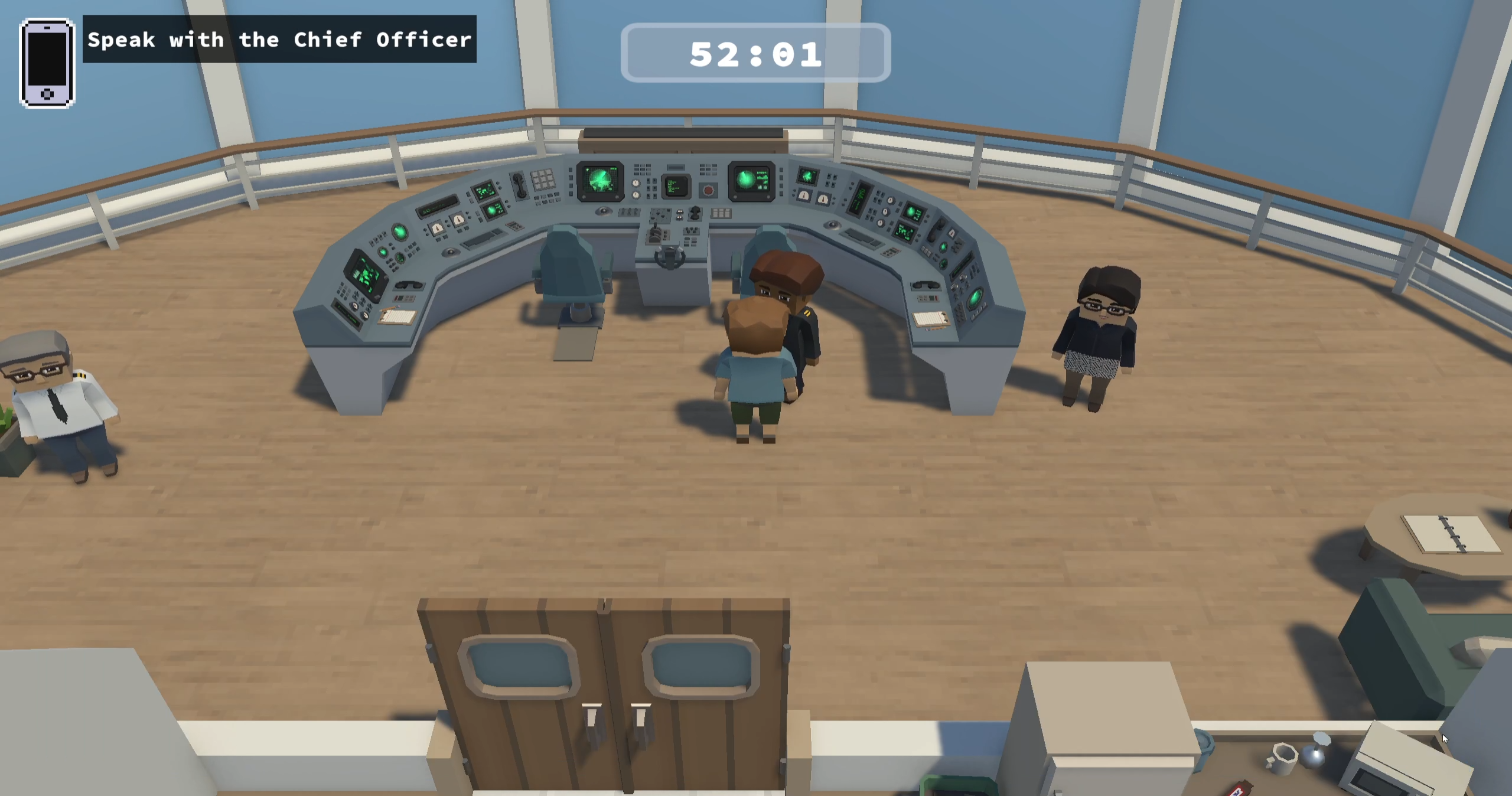
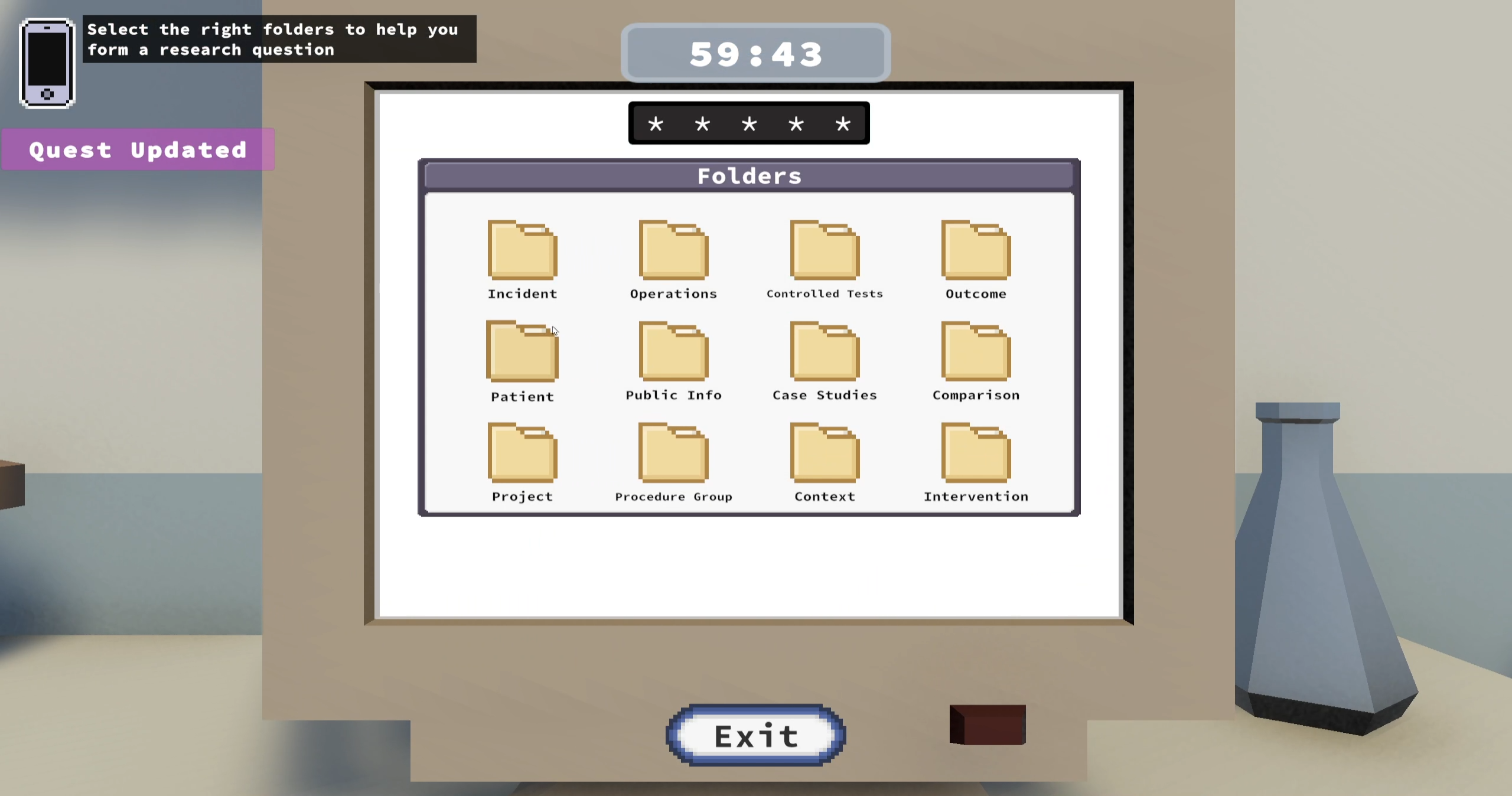
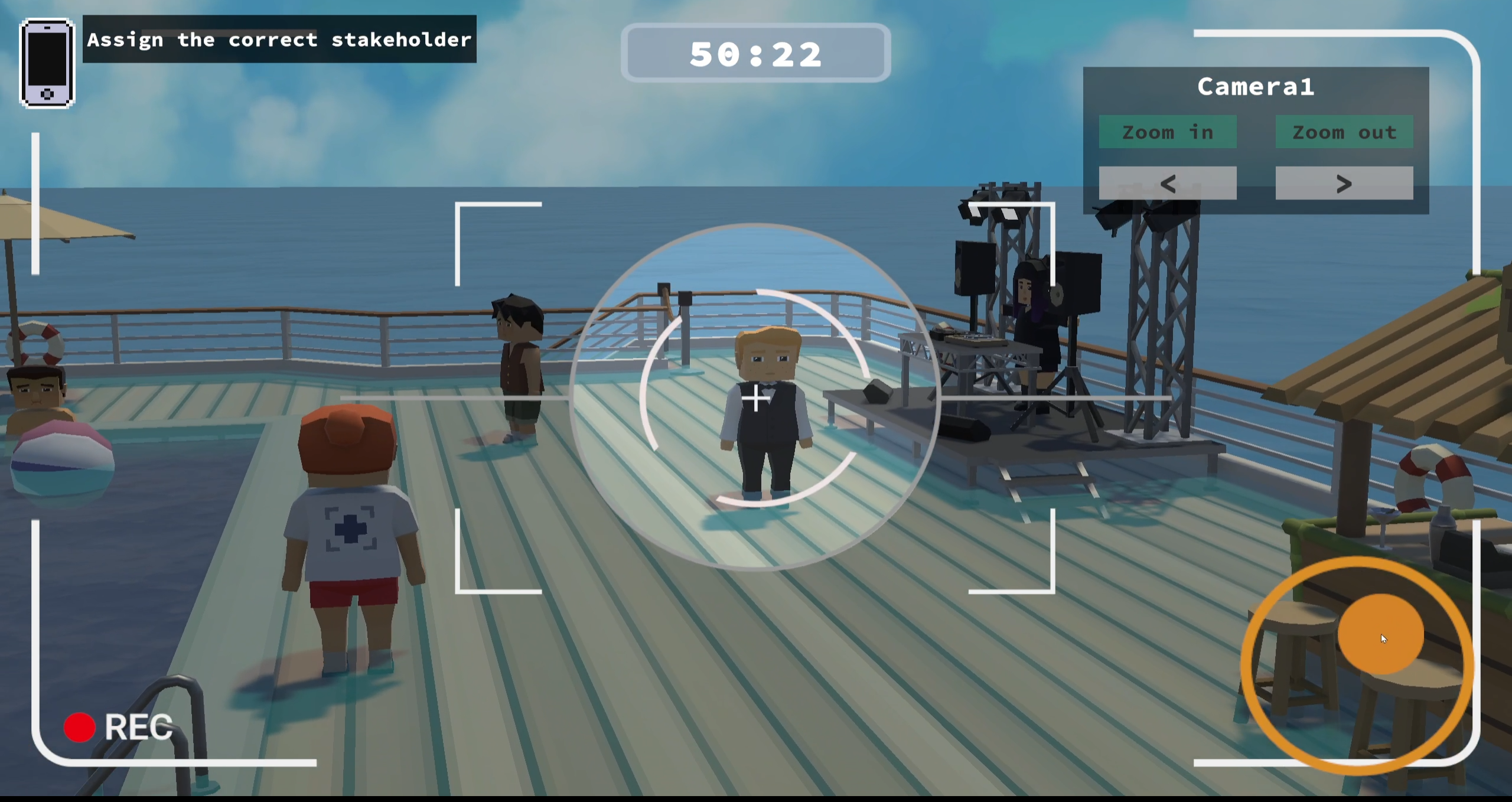
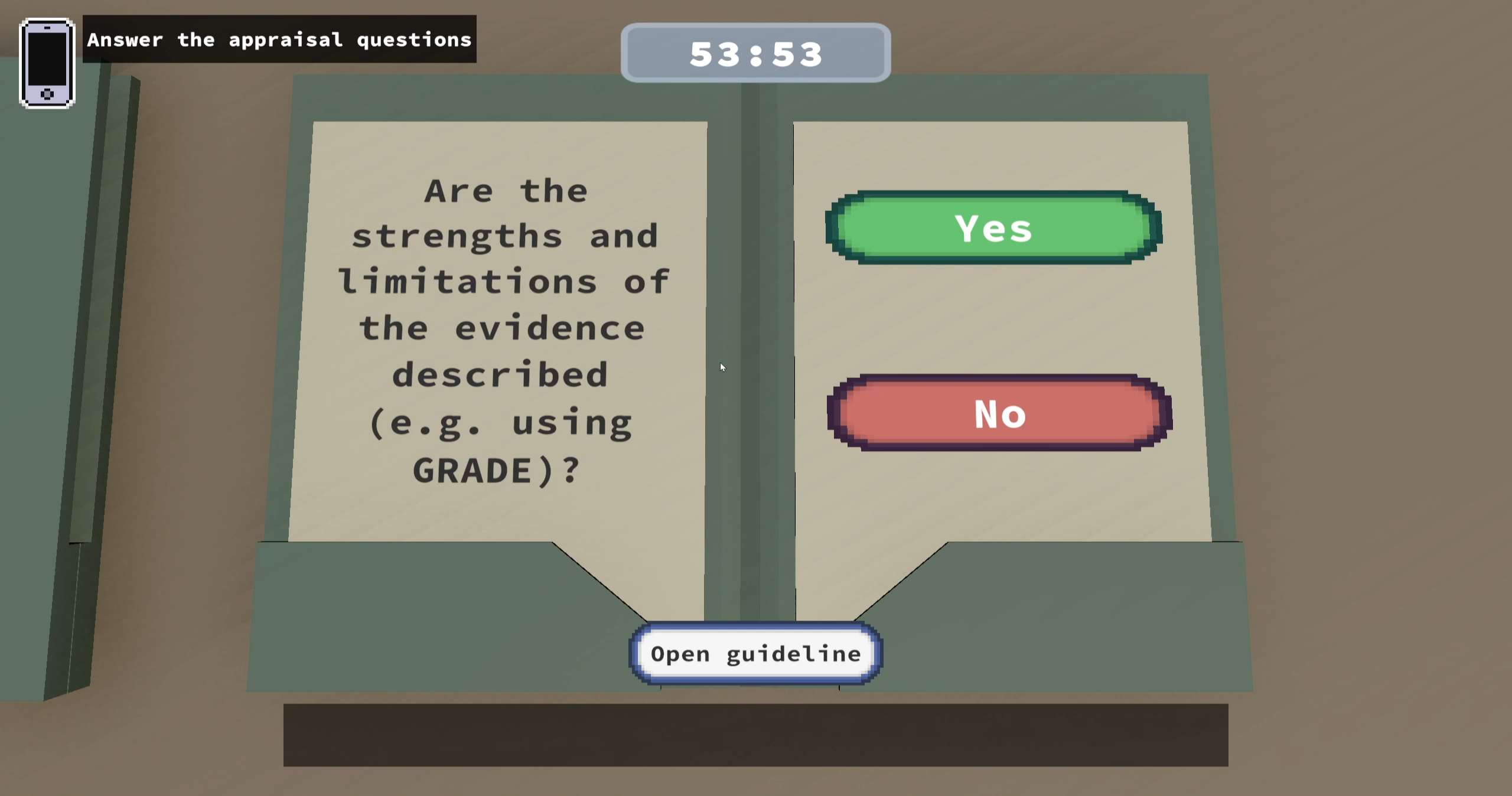
The project aims to develop and test an online escape room game to gain knowledge about evidence-based practice (EBP) in healthcare. The game is targeted to healthcare professionals, students and teachers and it is an innovative way to train EBP skills, and to bridge the gap between theory and practice.
The main idea is to set up a COIL (collaborative online international learning) with all the involved partners and let students participate in the online escape rooms in multicultural groups. This will not only boost the EBP skills of students, but also teamwork and multicultural competences.
WP1 will be in charge of Project Management, under the coordination of University Colleges Leuven-Limburg of Belgium. Main objective of the WP (overall): to perform efficient and persistent management of the project, by monitoring of the project’s progress, outputs and budget.
WP2 will be dedicated to innovation, exploration and development of the online EBP escape game. Main objective of the WP (overall): To develop an online escape game to teach the 5 steps of evidence-based practice (EBP) in healthcare professions.
WP3 will enhance to pilot testing of the online EBP escape game and evaluation of the educational value of the game. Main objective of the WP (overall): To assure that the developed EBP escape game can be used to learn the 5 steps of EBP by each ‘player’ (beyond health profession, culture, diversity and inclusivity).
WP4 deals with communication, dissemination and exploitation of results. Main objective of the WP (overall): To disseminate the EBP escape game and project results outside the partner consortium, to homogenize EBP training and increase sustainability of the escape game.
The overall goal of the project is to develop an online escape game to gain knowledge about evidence based practice (EBP) to implement EBP in classes and clinical practice. By doing so, the project will create a safe, entertaining method to train healthcare professionals in assessing clinical situations by applying EBP, provide a way to emphasize on the need of EBP in practice, as well as improve students’ and professionals’ perception towards – and appreciation of – EBP in practice.
Evidence-Based Practice (EBP) is a systematic approach to clinical decision-making that integrates the best available research evidence, clinical expertise, and individual patient preferences. EBP helps ensure that healthcare decisions are not only scientifically sound but also meaningful, feasible, and appropriate for diverse patient populations and care settings.
Despite the growing awareness of EBP´s value, many healthcare professionals still report difficulties applying it in daily practice. They often struggle with literature searches, critical appraisal of evidence, and practical implementation. As a result, there is a strong and growing demand for more effective, engaging, and structured EBP education—especially in initial training and professional development.
Studies show that although healthcare professionals generally hold positive attitudes toward EBP, many lack confidence in their ability to use it effectively. This gap between theoretical knowledge and practical application hinders the integration of EBP into clinical routines. Moreover, educational programs often focus more on technical skills and theoretical knowledge, dedicating insufficient attention to developing clinical reasoning, critical thinking, and decision-making.
Educators and academic institutions therefore play a crucial role in designing learning experiences that support EBP as an everyday, usable skill. The use of interactive teaching methods—such as case studies, journal clubs, workshops, and problem- based learning—has been shown to increase student engagement and deepen understanding of EBP content and relevance.
The EBP Game project aims to address these educational challenges by developing an interactive, game-based learning tool designed to improve EBP competencies among healthcare students. The game is grounded in the widely recognized Sackett Model of Evidence-Based Practice (1997), which offers a clear, five-step structure for implementing EBP in clinical settings.
The project will serve as an international center for EBP teaching and learning, integrating the game into the curricula of partner higher education institutions (HEIs) and promoting its adoption across the European academic space.
Sackett’s five-step model is widely used in clinical education and quality improvement initiatives. It offers a practical, replicable structure while allowing for clinical judgment and ethical sensitivity.
The five steps are:
This model promotes lifelong learning, professional accountability, and patient- centered care. Its adaptability makes it especially suitable for use in gamified and experiential learning formats.
The EBP Game project builds on Sackett’s structure, adapting it into a realistic and engaging educational scenario. The following five key steps serve as the game’s foundation:
This approach ensures that players not only learn EBP theory but also practice applying it in a realistic clinical setting, developing both competence and confidence.




Lecturer in evidence-based practice and clinical simulation at the University College Leuven-Limburg (UCLL) in Belgium. She conducts research at the department of Health innovation with the focus on gamification in education and evidence-based practice. She is also the coordinator of the Erasmus and international internships for the nursing education at UCLL.
Currently employed at UCLL University of Applied Sciences as researcher of the Centre of expertise Health Innovation, and as lecturer in the nursing and midwifery program. She obtained a PhD in Biomedical Sciences in 2008 from Maastricht University, the Netherlands. In 2017, she also obtained the Certificate of Pedagogical Competence. As a researcher, Evi has been coordinating or participating in several projects in the domain of elderly care and evidence-based practice, innovative technology for healthcare, blended learning, etc.
Studied Nutrition and Dietetics at UCLL in Leuven and obtained a Master of Science in Health Promotion at UGent. Since 2017, she works as a researcher at the Centre of Expertise Health Innovation and teaches in the Nutrition and Dietetics programme (UCLL). She is also a member of the Evidence-based committee of the professional association of dieticians.
A Senior Lecturer at Laurea UAS. Her expertise is in public health nursing, nursing of vulnerable groups.
Moreover, she is also coordinator of the Transatlantic Dual Degree Program in Nursing.
In her previous and ongoing RDI-projects she has developed and tested virtual learning environments
to educate nursing applicants about nursing profession, to orientate international nursing students
to clinical environments and to teach evidence-based practice to nursing professionals.
Furthermore, she is a part of Research in Nursing Education (RENE) research group led by the Department of Nursing Science, University of Turku.
Orcid: https://orcid.org/0000-0001-8147-5400
A senior lecturer at the Laurea UAS. Her area of expertise is acute nursing care. Since 2021 she has been part of the RENE (Research in Nursing Education) research group, which was established to promote and strengthen research in the field of health care education in Finland. In her PhD study, she focuses on evaluating students' competence in online nursing education. She has also co-authored a few educational books, including audio-visual video production for practical nursing students.
An Assistant Professor at the Medical University of Warsaw, is a midwife and Coordinator of the Mentoring Program for midwifery students. She conducts research on innovative teaching methods in student education and implements them in daily educational practice. She also serves as the European Co-chair of the Nursing Now Challengers Committee.
Graduate of the Interdepartmental Indi-Individual Studies in the Humanities at the University of Warsaw. Assistant professor at the Study of Health Psychology at the Centre for Humanities and Social Sciences of the Medical University of Warsaw. Facilitator of Dialogue facilitator at the Nansen Center for Peace and Dialogue. Psychodynamic psychotherapist in Transference-Focused Therapy (TFP).
Nurse with 16 years of experience in Oncology, specialized in rehabilitation nursing, and holding a master's degree in health education. His main interests are clinical communication, rehabilitation, and oncology. He coordinates the Master's program in Rehabilitation Nursing at Tâmega e Sousa School of Nursing|CESPU in Portugal and teaches clinical simulation, informatics, and health technologies.
Soraia Nicola Rodrigues has a degree in Nursing since 2006. She completed a Master's degree in Nursing Sciences in 2011 and her PhD in Nursing in 2024. She has worked as a Rehabilitation Nurse Specialist in the Cardiothoracic surgery wards since 2016. Her area of expertise is cardiorespiratory rehabilitation. She embarked on a teaching career in 2024, is now an adjunct professor and collaborates on the undergraduate nursing programmes and the master's degree in rehabilitation nursing.
Allan holds a degree in Pedagogy and a master's in educational research from the Autonomous University of Barcelona (UAB). He currently works as a Research Assistant in the Department of Applied Pedagogy at UAB and is a member of the PAFIU-GRID research group. His main research areas include active learning methodologies, research competencies, and innovative research methodologies.
Serra Húnter Lecturer at the Department of Applied Pedagogy, in Research Methods in Education, at the Universitat Autònoma de Barcelona.
She is a member of PAFIU research group on learning patterns and research training at the university;
and collaborator of GRID group for research and innovation in observational designs.
She co-coordinates CompREd innovation group on research competence in education.
Her research areas pilot around learning patterns, empowerment and life-long learning.
Orcid: https://orcid.org/0000-0002-4775-2563
Associate Professor in Research Methods in Education,
Serra Húnter Fellow, at the Faculty of Educational Sciences at the Universitat Autònoma de Barcelona,
and the Coordinator of International Internships of the Faculty.
She conducts research on learning transfer evaluation,
as well as on research competence development, and who to use it to be an evidence-based teacher.
She coordinates the EARLI SIG17 on Methods on Learning Research.
Orcid: https://orcid.org/0000-0002-5997-1536
Research Professor in the Nursing Department at the University School of Nursing and
Occupational Therapy of Terrassa (Universitat Autònoma de Barcelona - EUIT).
She is a member of the PAFIU-GRID research group and the CompREd innovation group.
Her research areas pilot around competence in students, transfer processes and student learning
in the field of clinical practice and the application of evidence based practice.
Orcid: Orcid: https://orcid.org/0000-0002-8642-9478
An Associate Professor of Applied Methodology in Behavioural Sciences at the Autonomous University of Barcelona (Spain),
and her research is conducted within the Department of Psychobiology and Methodology of Health Sciences.
Her expertise includes systematic observational designs, mixed methods, and multi-method approaches for studying daily
life and programme evaluation in the domains where psychology, education, and health intersect.
Orcid: https://orcid.org/0000-0002-5939-6842.
Research Professor in the Nursing Department at the University School of Nursing and Occupational Therapy of Terrassa (Universitat Autònoma de Barcelona - EUIT),
specialises in research methodology in health sciences and evidence-based practice.
She integrates her academic expertise with a focus on qualitative research, addressing critical areas in public and community health to improve understanding and care.
She is a researcher in the Complex Health Diagnoses and Interventions from Occupation and Care group (OCCARE).
Orcid: https://orcid.org/0000-0003-0210-7488.
Serra Húnter Lecturer in the Department of Educational Theories and Social Pedagogy at the Universitat Autònoma de Barcelona (UAB).
She holds a degree in Primary Education (Unife University, Peru), a Master's in Educational Planning and Management, and a PhD in Educational Sciences.
Her teaching and research focus on social pedagogy, leisure, ICTs in education, and community networks,
framed within open and flexible lifelong education across university and community contexts.
Orcid: https://orcid.org/0000-0003-1499-5478
She holds a degree and PhD in Psychology. She is a university professor, researcher, and consultant specializing in behavioural psychology, education, and data analysis.
Currently, She is working as a researcher in the Department of Sociology at the Autonomous University of Barcelona.
She is a member of the PAFIU-GRID research group and the CompREd innovation group.
Her work focuses on cognitive processes, personality, and individual differences, with applications in education, psychology, and migration studies.
In addition, she is the founder of the Lean In Barcelona Migrant Women Circle within the Lean In organisation.
Orcid: https://orcid.org/0000-0002-3944-9820
Has been developing educational games and virtual reality for the past 10 years, since graduating Game College (Grenå, Denmark) where he studied game design. His focus was on 3D modelling and sound engineering. René also holds an AP degree in multimedia design from University College Lillebælt in Odense, where he worked with creating gamebased solutions with educational purposes.
Has been leading XR, AI, and interactive media projects across culture, education, and industry for the past five years. As COO of Innopixel, Henrik specializes in project management and concept development, bridging creative technology with strategic partnerships. His work spans VR training simulators, AR learning tools, and 3D digital games, combining technical insight with a focus on innovation and cross-sector collaboration.
Co-funded by the European Union. Views and opinions expressed are however those of the author(s) only and do not necessarily reflect those of the European Union or CINEA. Neither the European Union nor the granting authority can be held responsible for them.